Monday, 9 May 2011

Botanic Gardens, Autumn

'Autumn' is a Victorian era sculpture located in the Royal Botanic Gardens. It is one of the 'Four Seasons' statues that adorn the Palace Gardens Steps. They were shipped from Italy in 1883 from the studio of Charles Francis Summers, an Australian-born sculptor living in Rome, to replace statues lost after the Garden Palace burnt down. They had been originally located here but in later years were separated and distributed around the gardens. Some lost vital body parts and adornments but Australian sculptor Jacek Luszczyk restored them by recreating missing parts. The restored statues were unveiled in their original location in 2010. 'Spring' and 'Summer' are at the top of the steps, with 'Autumn' and 'Winter' at the bottom.

Sunday, 8 May 2011

Botanic Gardens, flying foxes

The grey-headed and black flying-foxes, otherwise known as fruit bats, are common in the Royal Botanic Gardens. Flying foxes are nocturnal mammals that can be seen roosting in the trees in the middle of the day. The grey-headed flying foxes have the largest body size of all bats with a maximum wingspan of one metre. They like to eat the nectar and pollen of eucalypts and other native trees, such as paperbarks and banksias. They also like eating rainforest fruits, such as figs and lilly pilly berries. The colony is damaging rare trees here and there are now plans to relocate them at great cost.

Saturday, 7 May 2011

Botanic Gardens, Mare and Foal

Mare and Foal is a sculpture by French artist, Arthur Jacques Le Duc located in the Royal Botanic Gardens. This bronze sculpure of La Reyna and her foal was purchased in 1891 and donated to the Royal Botanic Gardens in 1958.

Thursday, 5 May 2011

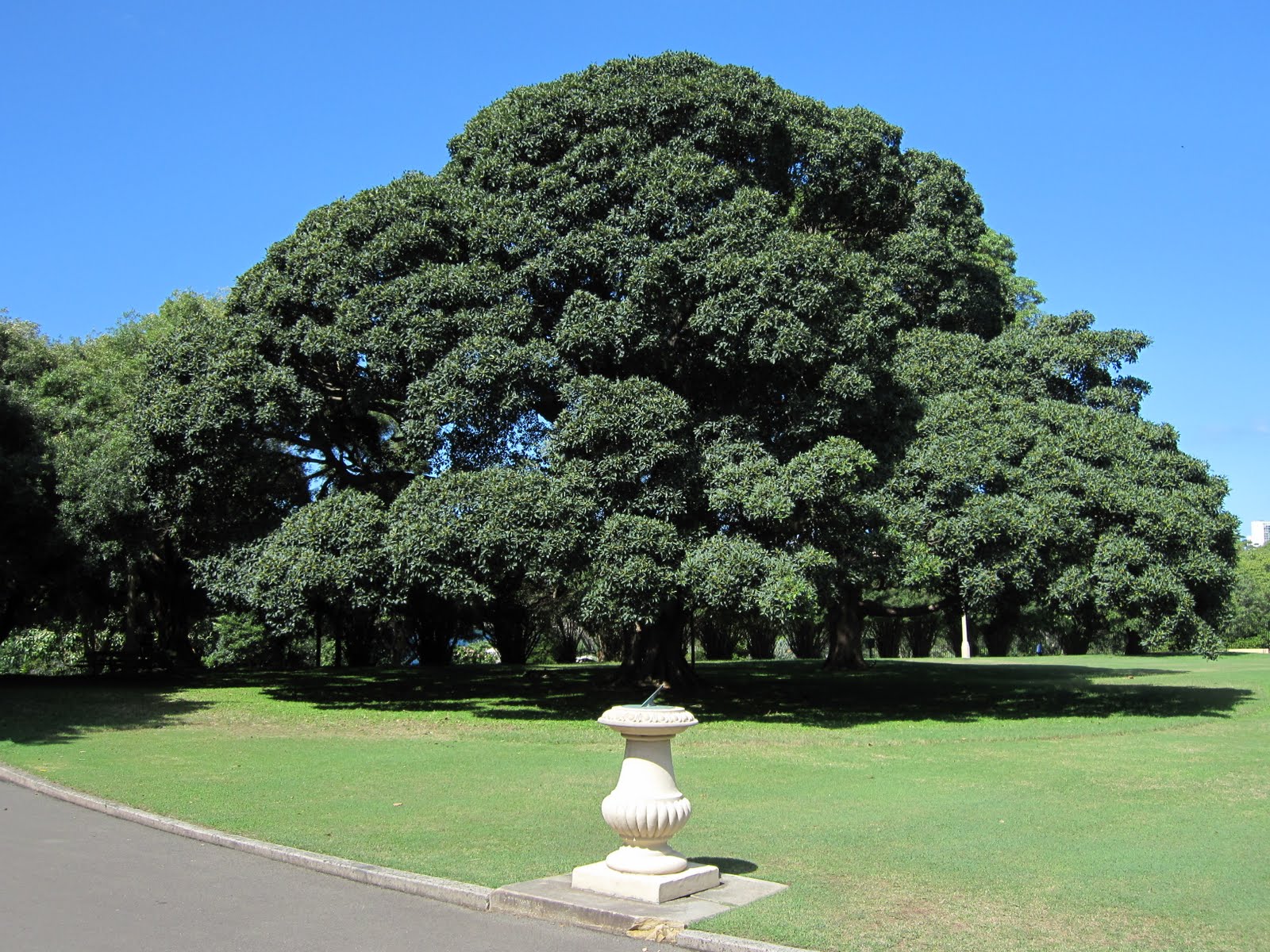
Government House, sundial

This sundial beside the driveway is dwarfed by these trees in the grounds of Government House, in the Royal Botanic Gardens.

Tuesday, 3 May 2011

Australian Museum

The Australian Museum is located at the edge of the city, in the inner city suburb of Darlinghurst. The Barnet Wing was opened in 1868, designed by colonial architect Alexander Dawson in the Neo Classicism architectural style. It features the main entrance of the museum from College Street, opposite Hyde Park. It was an extension of the Lewis Wing built in 1852 in William Street.
Linked to: My World Tuesday.

Monday, 2 May 2011

Redfern, Strawberry Hills, post office

This Strawberry Hills business centre post office is located on the ground floor of the Australia Post state headquarters, in the inner city suburb of Redfern. The wall-mounted post office boxes are located outside, running along the walls of two passageways on either side of this unit. The architectural style and colour of the unit is typical of the 1980s, which is when the Prince Alfred Park Building was built. A sign of these times is the number of vacant post office boxes flagged by the red and white advertisment signs indicating which ones are available to rent.

Sunday, 1 May 2011

Redfern, Strawberry Hills, post office (Theme Day: Mailbox)

These mailboxes are located outside the Strawberry Hills post office in the inner city suburb of Redfern. The red Australia Post mailbox is for standard letters and packages sent anywhere in the world, while the gold Express Post mailbox is for mail sent in special Express Post envelopes which for an additional cost are guaranteed next day delivery to certain parts of Australia. 
Linked to: Theme Day.

Saturday, 30 April 2011

Redfern, Strawberry Hills, Australia Post headquarters

The state headquarters of Australia Post are located in the Prince Alfred Park Building on Cleveland Street, in an inner city locality known as Strawberry Hills. This part of Strawberry Hills is actually located in the suburb of Redfern. The building replaced the old Sydney Mail Exchange, also previously known as the notorious Redfern Mail Exchange which operated from 1965-1985. The palm trees outside the office building lead you down to Prince Alfred Park opposite. Strawberry Hill was the name of a hill under Northcott Place in nearby Surry Hills, later altered to Strawberry Hills for the locality.

Friday, 29 April 2011

Potts Point, Young Endeavour

 Young Endeavour is moored in Woolloomooloo Bay at Potts Point. The ship was pledged by the Australian government to serve Australian youth with a unique, challenging and inspirational experience at sea. The Royal Australian Navy operates and maintains the ship, with the Young Endeavour Youth Scheme managing the associated sail training program. Construction on the ship began in May 1986 in Lowestoft, England and she began the long voyage to Australia on 3 August 1987 with a crew which included 24 young people from Britain and Australia. It became a gift from the United Kingdom to the government and people of Australia to mark Australia's Bicentenary in 1988. The ship has made many international voyages since then and participated in major events. It completed a circumnavigation of the world in 1992, which included representing Australia at celebrations in Europe and America commemorating the 500th anniversary of Columbus's Voyage of Discovery to the New World.
Linked to: Skywatch Friday.

Thursday, 28 April 2011

Botanic Gardens, tree

In the Royal Botanic Gardens is a Dragon's Blood Tree or Dracaena Draco, which fell over in May 2008. It won't be lifted up to its former upright position because the trunk was damaged near the base and further movement may cause it to snap off. It has been fenced off to protect the branches of damage and reduce soil compaction around the roots. This tree which is over 100 years old is a native to the Canary Islands, where they can live up to 600 years in the wild. Its common name 'Dragon's Blood Tree' comes from the bright red resin it produces, with many uses such as the production of varnish used by violin makers.

Wednesday, 27 April 2011

Botanic Gardens, Farm Cove

This bench in the Royal Botanic Gardens provides a good view of Farm Cove on Sydney Harbour. The seawall surrounding it is constructed of large sandstone blocks. It is bordered by a pedestrian walkway that runs from the Sydney Opera House through the Royal Botanic Gardens to the Domain parklands and Mrs Macquarie's Chair. Before the Europeans arrived, Farm Cove was called Woccanmagully by the Aboriginal people and the area was an important ceremonial site. After Europeans arrived in 1788, it became the site of the colony’s first farm, although not very successful because the soil in the Farm Cove area proved to be infertile.

Tuesday, 26 April 2011

Redfern, Glengarry Castle Hotel

Glengarry Castle Hotel is located on the corner of Lawson Street and Abercrombie Street, in the inner city suburb of Redfern. The hotel was established around 1851. This is an old photo, so the prices of beer in schooners and jugs will not be as cheap as the banners advertise. The exterior of this pub has recently been repainted to a neutral colour scheme but I prefer this style, even with the paint peeling. The red mini waiting at the traffic lights, matched the colour scheme too.

Monday, 25 April 2011

Ashfield, war memorial

The Ashfield war memorial stands in the centre of Ashfield Park, beside Parramatta Road, in the inner west suburb of Ashfield. It was established in 1921 and dedicated as a grateful tribute to the soldiers, sailors and nurses who volunteered and gave their lives in World War 1. It is a ten metre high obelisk on a concrete plinth with an enamelled tiled floor. The Rosemary Bushes have been planted by Ashfield Council in memory of those who gave their lives in the Boer War, World War I, World War II, Korean War, Malayan War and Vietnam War. The wreaths at the base of the memorial have been laid to commemorate Anzac Day, which is a day of remembrance in Australia and New Zealand today.

Saturday, 23 April 2011

Alexandria, Sydney Park, wetlands

Sydney Park, in the inner city suburb of Alexandria, features a number of ponds and wetlands that attract many animals and birds. The site is a former brickworks that has been transformed into 44 hectares of parkland. This boardwalk extends into one of the ponds at the southern end of the park. The typical Autumn day started out with a warm sunny morning but ended up with a cool overcast afternoon.

Friday, 22 April 2011

Darlington, Church of the Assumption of Our Lady

Church of the Assumption of Our Lady is a Greek Orthodox Church located on Abercrombie Street, in the inner city suburb of Darlington. The architectural style of this church is not one seen much in Australia. With these colours of whitewash white and sky blue, it looks more like something you might see in Greece.

Thursday, 21 April 2011

Darlington, Royal Hotel

The Royal Hotel is located in the inner city suburb of Darlington. It sits on the prominent corner of Abercrombie Street and Codrington Street, behind this roundabout. It was built in 1894 by James England to serve the needs of local railway workers at the nearby Eveleigh railway workshops. The suburb was named after Governor Ralph Darling. The area was originally known as Golden Grove when it was used as market gardens, and that name remains as a locality within the suburb.

Wednesday, 20 April 2011

Birchgrove, Ballast Point Park, Delicate Balance

"Delicate Balance" is a public artwork created by Robyn Backen, located at Ballast Point Park at Birchgrove, looking out towards Mort Bay and Sydney Harbour. The artwork hovers over the water's edge and can be entered, suggesting the entrance to a lighthouse or jetty. A series of cutouts offers views of the harbour, city, sky and park. The water can also be viewed from a metal grate in the floor and its sound reverberates through the artwork, like hearing the sea in a shell held up to the ear.

Tuesday, 19 April 2011

Birchgrove, Ballast Point Park, Tank 101

"Tank 101" is both artwork and a renewable energy generator, located in the middle of Ballast Point Park at Birchgrove. It has been created to symbolise the past working history of the site as an oil refinery by Caltex. The original Tank 101, built in the 1930s, was the largest industrial storage vessel at this site, used to store crude oil for processing into lubrication oil. It was the largest tank in Australia to use rivet technology. Graphics with a dot font typeface are used throughout this site to reflect the thousands of rivets and circular tank shapes that covered the site. Panels of curved sheet steel from the old tank were rescued from the old tank and incorporated in the structure. The text is a line from "The Death of Isaac Nathan" a poem by Australian poet Les Murray: "Stone statues of ancient waves, tongue like dingoes on shore". Eight wind turbines harness the sea breeze to create energy that is used in park lighting.

Monday, 18 April 2011

Birchgrove, Ballast Point Park

This is the middle section of the gates at the entrance to Ballast Point Park, in the inner west suburb of Birchgrove. This contemporary design features part of the name of the park in each section of the gate. This former industrial site was transformed into a pulblic park in 2009. The Sydney city skyline can be seen just peeking through and above the gate.

Sunday, 17 April 2011

Birchgrove, Ballast Point Park

This rockery is part of Ballast Point Park, in the inner west suburb of Birchgrove, which looks out towards Goat Island and the Sydney Harbour Bridge. The name Ballast Point is derived from the early days of the colony when ships arrived from England with a full load but returned empty. To control buoyancy, stability and speed, sandstone was cut from this point to fill the ships as ballast.

Saturday, 16 April 2011

Birchgrove, Ballast Point

This view is from Ballast Point Park in the inner city suburb of Birchgrove, looking across Mort Bay towards the Sydney city skyline. The object on the edge of the shore is an artwork called 'Delicate Balance' by Robyn Bracken. Last weekend, this yacht was venturing out to sail on Sydney Harbour.
Click here to view all participants of Weekend Reflections

Friday, 15 April 2011

The Domain, Almost Once

'Almost Once' is a sculpture located behind the Art Gallery of New South Wales on the edge of the Domain, overlooking the Cahill Expressway as it connects to the Eastern Distributor. The sculpture was created by Brett Whiteley in 1968 and presented as a gift to the art gallery in 1991. Made from black butt timber and fibreglass it depicts a redhead match alongside a burnt match. It stands at 8 metres including the plinth and 6.6 metres without it.

Thursday, 14 April 2011

Balmain, bank

This historic bank building is located on Darling Street in the inner west suburb of Balmain. Built in 1903 for the Bank of New South Wales, it was designed by architects John Sulman and Joseph Power. This Victorian architectural design features a triangular pediment with a coat-of-arms, supported by corinthian columns. The design features symbols found in the official coat-of-arms granted to the state of New South Wales in 1906 such as the wheat sheaf, golden fleece, rising sun and southern cross.

Wednesday, 13 April 2011

Balmain, Thames Street wharf

Balmain Wharf, also known as the Thames Street wharf is in the inner west suburb of Balmain. Sitting on Mort Bay, it is serviced by Sydney Ferries which provide regular services between Circular Quay and Parramatta. There's a glimpse of the Sydney Harbour Bridge in the distance.

Monday, 11 April 2011

Dundas Valley, bus stops

These bus shelters are located along Yates Avenue in the north western suburb of Dundas Valley.
 Linked to: Mellow Yellow Monday

Friday, 8 April 2011

Thursday, 7 April 2011

Telopea, Waratah Shopping Centre

Waratah Shopping Centre is a group of shops located along Benaud Place in the western suburb of Telopea. The name of the suburb comes from Telopea Speciosissima, a native flower that was abundant in the area before European settlement. The telopea is more commonly known as the Waratah, which is also the floral emblem of the state of New South Wales. While the shops here are certainly not architectural wonders, they have tried to enhance the area with a colourful graffiti mural down the side of the shops and this nature strip garden, in the middle of the road.
Click here to view all participants of Signs, Signs

Tuesday, 5 April 2011

Toongabbie, Portico Park

Portico Park is located in the western suburb of Toongabbie. This walkway, with this tall lamp as a centre piece, links the railway station with the shopping centre. The name Toongabbie is derived from an Aboriginal word, reported as meaning 'place by the water or the meeting of the waters'. The name was used by early European settlers from 1792 after Governor Arthur Phillip asked the local Aborigines what they called this area.

Monday, 4 April 2011

Harris Park, house

Kenilworth is a heritage listed house in Allen Street, in the western suburb of Harris Park. It was built around 1900 in the Victorian style of architrecture. In recent times it had been used as a school by the Australian International Conservatorium of Music and since 2005 forms part of the Australian International Performing Arts High School.

Sunday, 3 April 2011

Sydney Harbour Bridge, Greenhouse

'Greenhouse by Joost' was a temporary eco-friendly cafe with spectacular views installed on the shore at Campbells Cove in The Rocks. The building was created by artist Joost Bakker and built using recycled materials. Three old shipping containers made up one of the walls and were decorated with a mural featuring butterflies and children playing. This view is from the Overseas Passenger Terminal towards the Harbour Bridge. The cafe closed this week after eight successful weeks and since it was quite popular there are plans to rebuild it in a permanent location. You can see a daytime of the cafe from another angle here.

Saturday, 2 April 2011

Friday, 1 April 2011

Carlton Railway Station, sunset (Theme Day: Edges)

This sunset is over the railway station in the southern suburb of Carlton. The view is from the edge of the concourse, down to the edges of the platform and the edges of the station buildings.

Thursday, 31 March 2011

Sans Souci, cannon

This cannon barrel stands as a monument in Cook Park on the shore of the Georges River. It is located near the mouth of the river at Botany Bay, in the southern suburb of Sans Souci. The barrel came from the HMS Wolverine, flagship of the Australian Squadron 1876-1881. HMS Wolverine was built at Woolwich dock, England in 1863 as a three masted steam corvette with 21 guns and a flush deck. When it arrived in Sydney it served as a training ship for the naval brigade. It was sold off in 1895 and when it became unseaworthy ended up in Auckland, New Zealand. It was dismantled at Brick Bay, later renamed Stanley Bay.

Wednesday, 30 March 2011

Sandringham, baths

Sandringham Baths are located on the shore of Botany Bay, in the southern suburb of Sandringham. The weather has started to cool now that Autumn has arrived and there weren't any swimmers here late in the afternoon as this seagull kept watch. This area had been known as Stripper's Point in the 1830s, from the local occupation of tree-felling and bark-stripping. Luckily the name was changed to Sandringham by William Rust, an ardent royalist who built the Prince of Wales Hotel here in the 1870s to honour Edward VII, the Prince of Wales, who in 1872 was also building a royal residence at Sandringham, in Norfolk, England.

Tuesday, 29 March 2011

Croydon Park, pub

The Croydon Park Hotel is located along Georges River Road, in the inner west suburb of Croydon Park. It is typical of the style of classic old pub that you see out in the suburbs. While many of these types of pubs have closed, been redeveloped or replaced by larger venues over the years, it's good to see that many have survived too.

Monday, 28 March 2011

Croydon Park, house

"But-Har-Gra" is a heritage listed mansion located on the corner of Georges River Road and Croydon Avenue, in the inner west suburb of Croydon Park. It was built in 1890 in the Victorian architectural style and became the Church of England Hostel for Girls founded by Mariam Annette Grant (nee Button). The name But-Har-Gra comes from her maiden name and her two married names. The estate was left to the Church of England and since 1959 has been used as residential accommodation for students and their families of the Moore Theological College, which instructs ministers for the Anglican Church in Sydney.

Saturday, 26 March 2011

Pyrmont, lamp and bench

This lamp, tiered bench and decorative pergola are located at the Pyrmont end of the pedestrian walkway on the Anzac Bridge. I chose this photo to highlight Earth Hour, an annual event to to raise awareness of the need to take action on climate change. Participants switch off lights and electrical equipment for one hour at 8.30pm on the last Saturday of March. Earth Hour started in Sydney in 2007 with approximately 2.2 million people and 2,100 businesses taking part. It has grown every year and spread across the world, with 4,000 cities and 128 countries involved in 2010.

Friday, 25 March 2011

Sydney Opera House, YouTube Symphony Orchestra Grand Finale

A final look at the light projections on the Sydney Opera House which were part of the YouTube Symphony Orchestra Grand Finale. These projections featured live images from the concert mixed with dramatic scenes of clouds rolling across the sky and the sun setting.
Click here to view all participants of Skywatch Friday
Related Posts Plugin for WordPress, Blogger...